

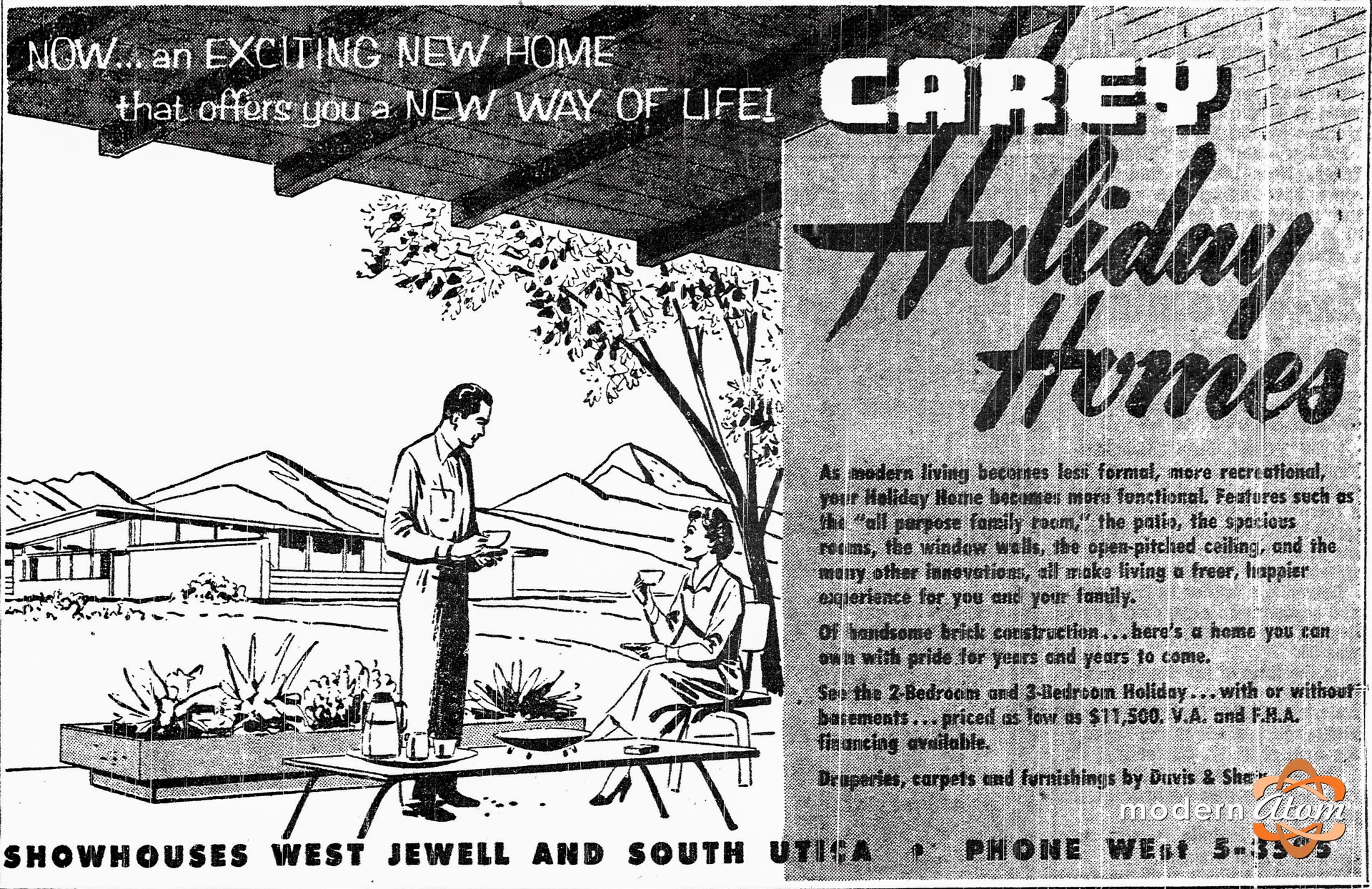
NOW . . . an EXCITING NEW HOME that offers you a NEW WAY OF LIFE!
This tagline from one of the big, beautiful newspaper ads for the Carey “Holiday Homes” in Denver’s Harvey Park from the summer of 1954 sums up beautifully what merchant home builders were trying to achieve with modern architecture (what we now call mid-century modern design) in the 1950s. Carey Construction Co. was not just selling you a house; they were not just selling you four walls and a roof—they were selling you a new way of living. Informal, functional, easier . . . all to make living “a freeing, happier experience for you . . .” Part of why this is so great is for the same reason mid-century modern real estate has had such staying power in recent years - the design of these homes has been re-discovered as being about much more than a trendy style or fashion statement. It is architecture designed around enhancing the human experience, and buyers of mid-century modern homes can see that in the Holiday Homes and others in Harvey Park and beyond.
To achieve this, builder Lou Carey retained a talented and well educated young architect to design the Holiday Homes – Norton Polivnick of the firm Baume & Polivnick, whose Ivy League education included an undergrad from MIT and a graduate degree from Harvard University, where he studied under none other than Walter Gropius – one of the founders of the Bauhaus in Germany and really one of the fathers of the modern movement in architecture. You could not have had better architecture credentials at the time.
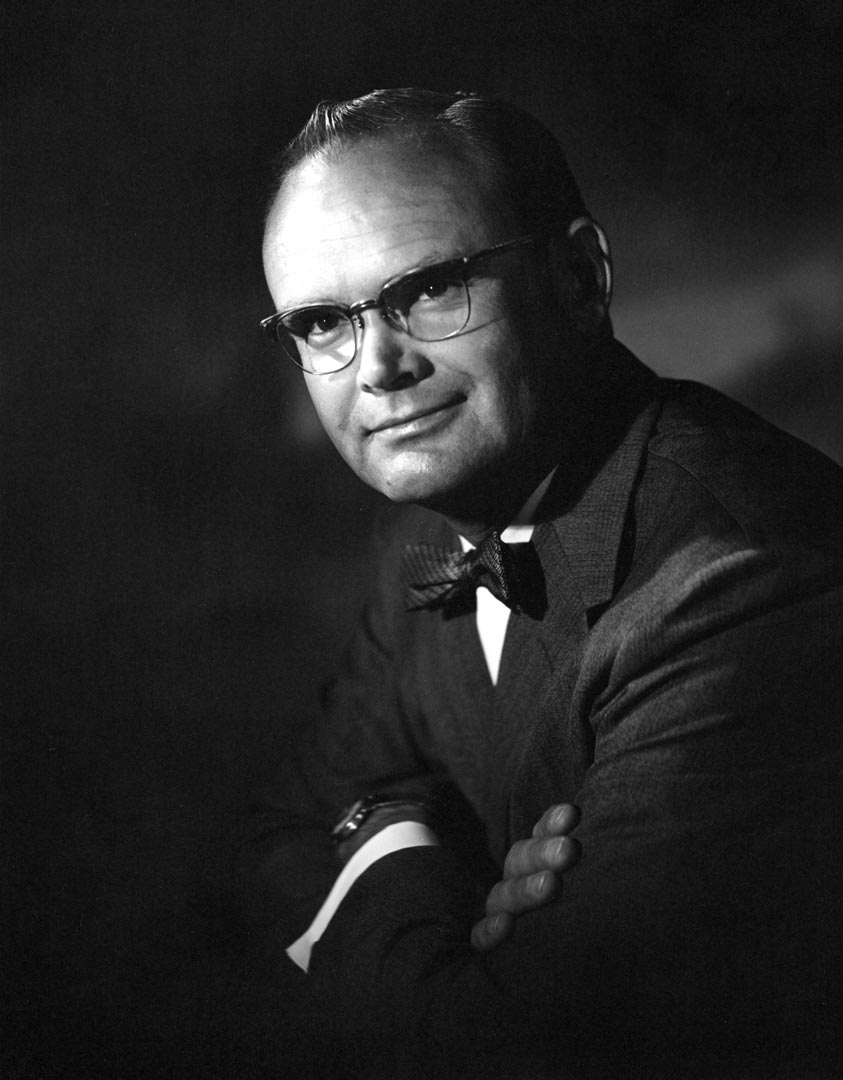
Home developer Lou Carey of Carey Construction Co.

Architect Norton Polivnick and wife Phyllis
More than that though, Carey was succeeding to do what many builders at the time could not – he committed to an all-modern product line in a time in which modern architecture was almost impossible to finance in the housing market. In the 1950s, the V.A. and the F.H.A. were actively under-appraising modern architecture. So while the modern architecture of the time was appealing and wildly popular, builders across the country were finding out the hard way that they could not build modern homes. The Denver area is littered with false-starts – neighborhoods that started with a modern product and had to quit building moderns entirely or make them part of an otherwise traditional product line because the V.A. and F.H.A. were appraising the homes well below a profitable value – at a time when the great majority of home buyers were dependent on these government backed loans. Most builders had no choice but to move to a more traditional product in order not to lose their shirts. How Carey managed to take the risk and pull it off is unknown, but he is one of only a few Denver area builders who were able to make it happen, and he succeeded in building over 130 in Harvey Park – and it seems to one of the things that made a difference was to have an architect, in this case Norton Polivnick involved in the project.
Flashback! Photos of the Carey Holiday Homes When They Were Brand New
I recently uncovered these slides at the Denver Public Library . . . while these slides are somewhat faded, you can get a sense of the original colors of these homes (look at the yellow door on the third house)! Notice how there are NO trees (nearly all of the big, mature trees that Harvey Park is known for were planted around this time) - and the streets aren't even paved. This became a huge problem for Harvey Park residents, as the dirt streets got pretty rutted over time until they finally got paved. This is one reason why cities now require developers to pave the streets before they can build even the first house in a present-day development.
The Design of the 1954 Carey “Holiday Homes”
The Carey Holiday Homes were offered in two different floorplans initially, which each had multiple variations to create architectural variety along the street. A buyer had a choice between two or three bedrooms (each with only one bath), vaulted ceilings or not in the living areas, and optional basements.
Exteriors were a mix of brick and wood siding (a choice that likely helped earn better FHA/VA appraisals), and most had an attached 1-car carport. Even though there were really only two floorplans offered originally, those foorplans were flexible enough to make for several different variations of house elevations, placing the doors and windows in different locations, and even placing the house on the lot in a variety of ways to make it look like there were many more models - and to tune the home to the taste of the buyers. This extra flexibility and variety is one aspect that distinguishes these houses as being designed by a talented architect, rather than just being an in-house builder design.
The 2-Bedroom Model
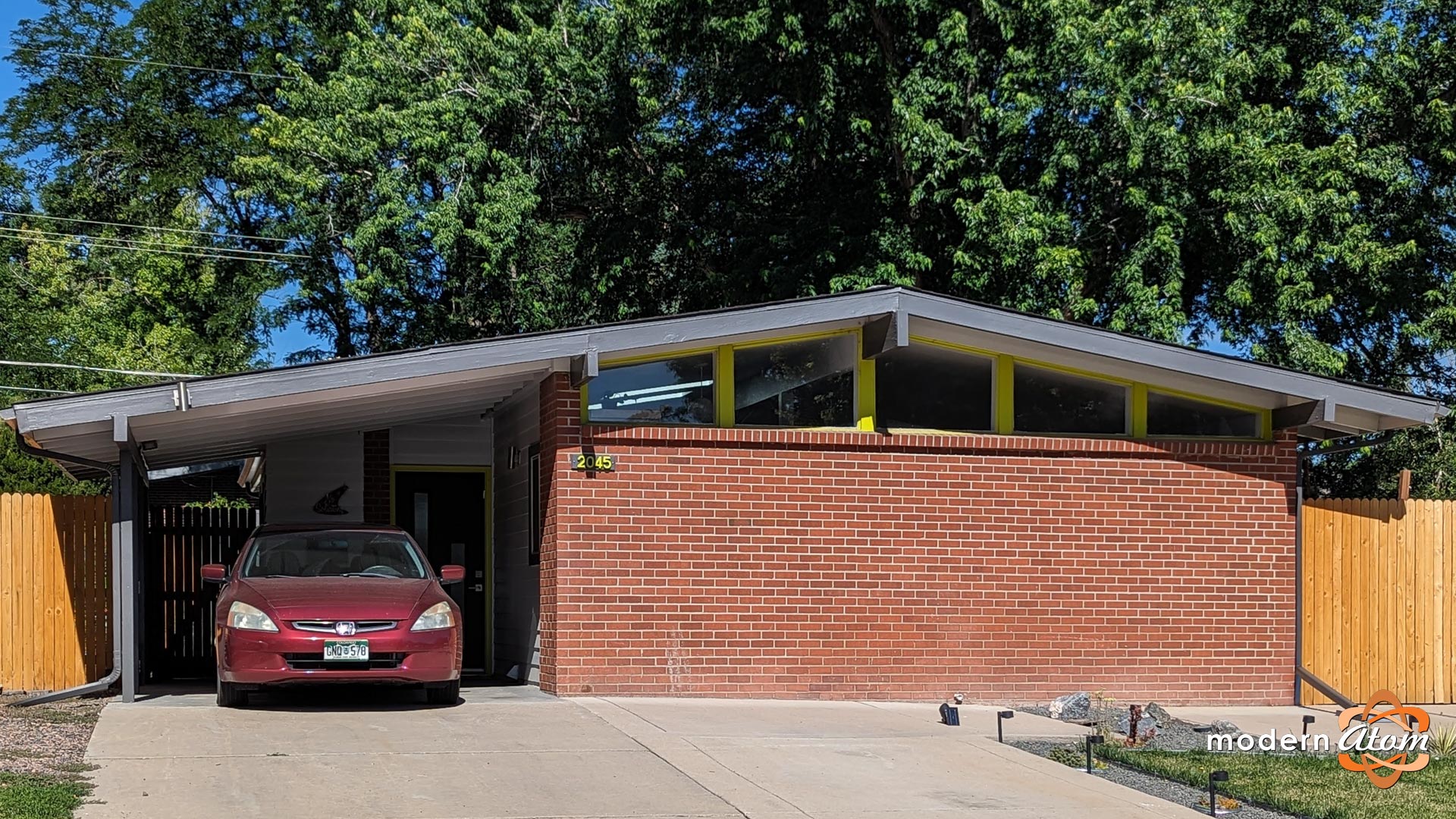
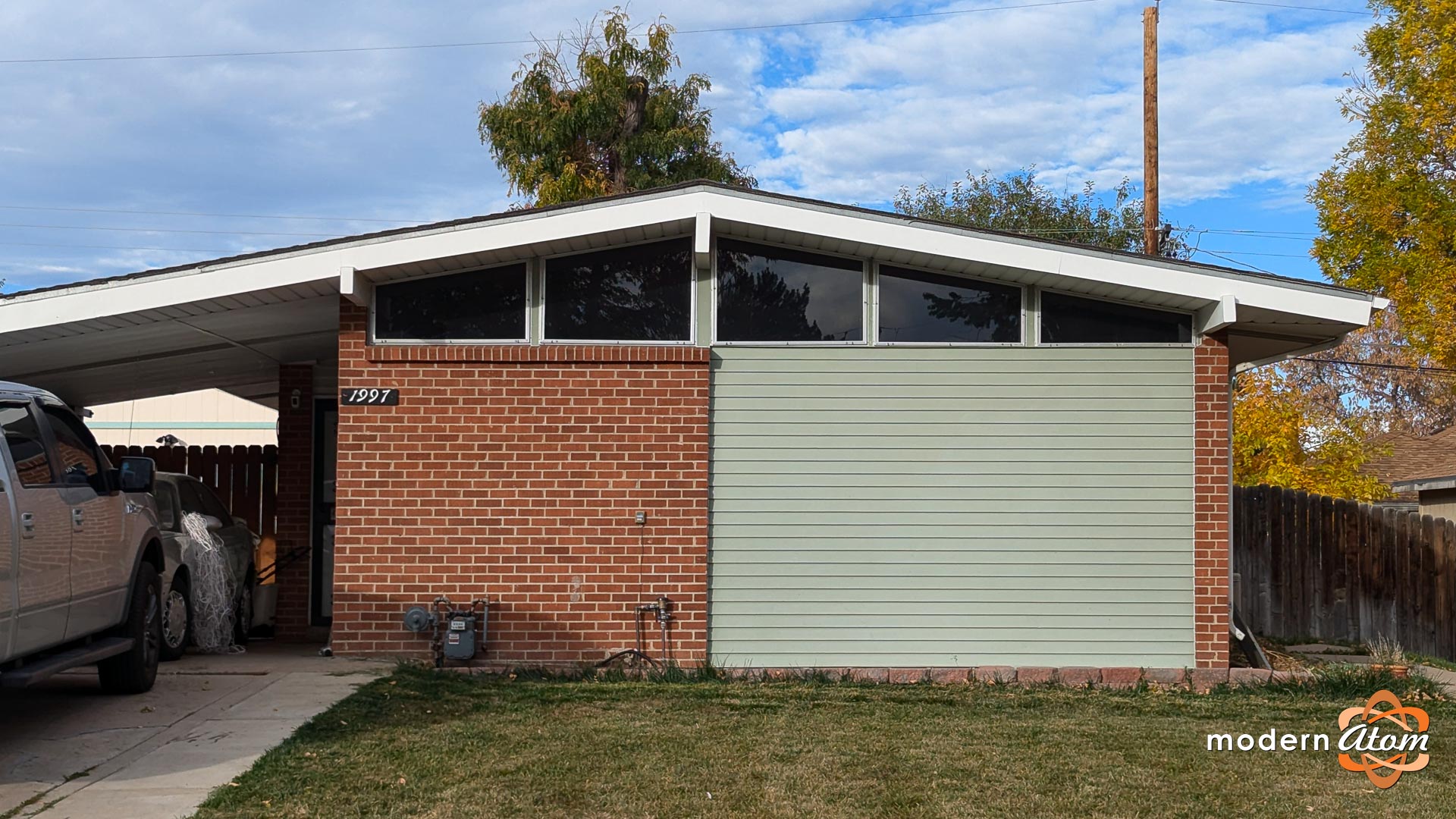
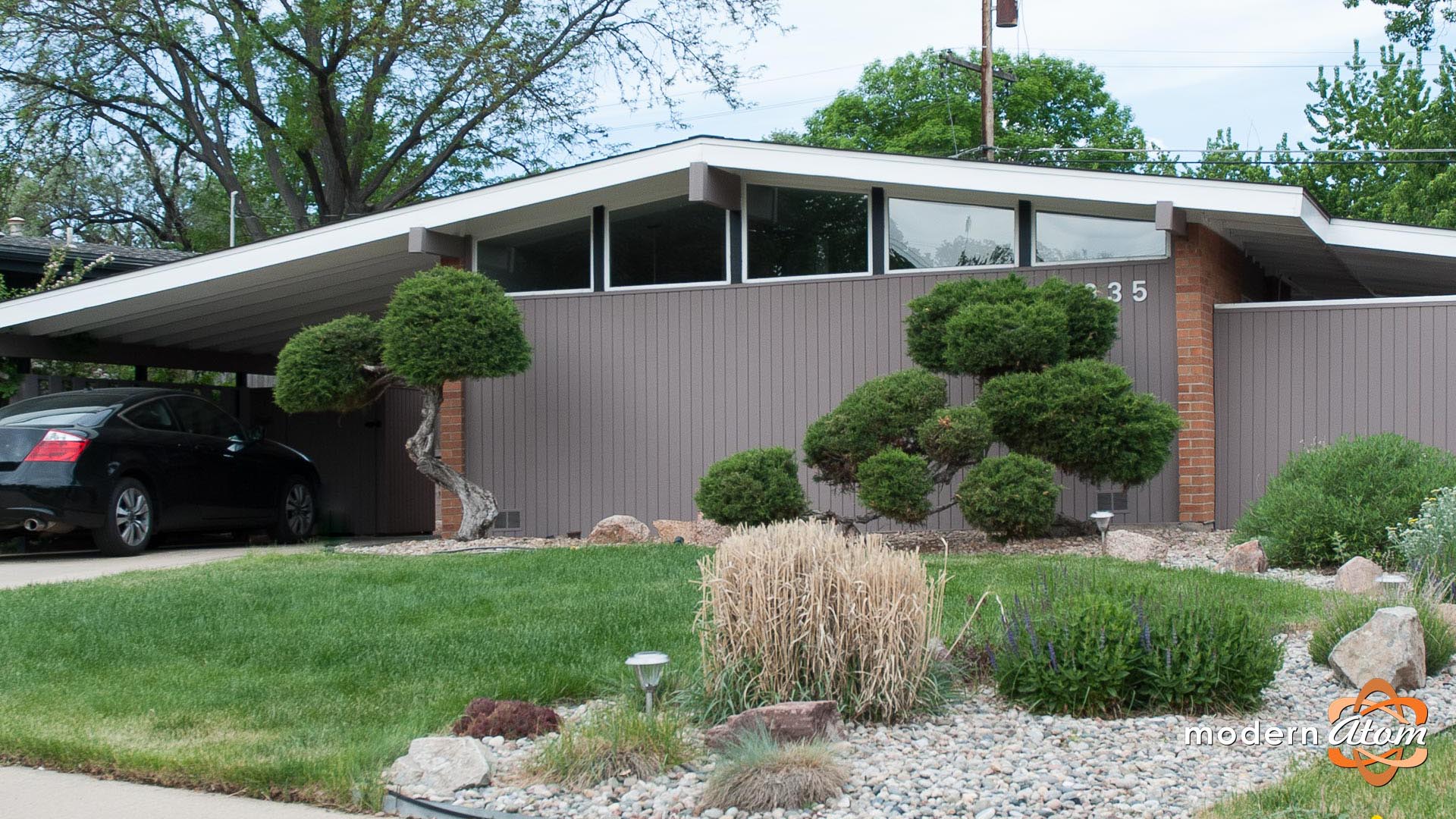
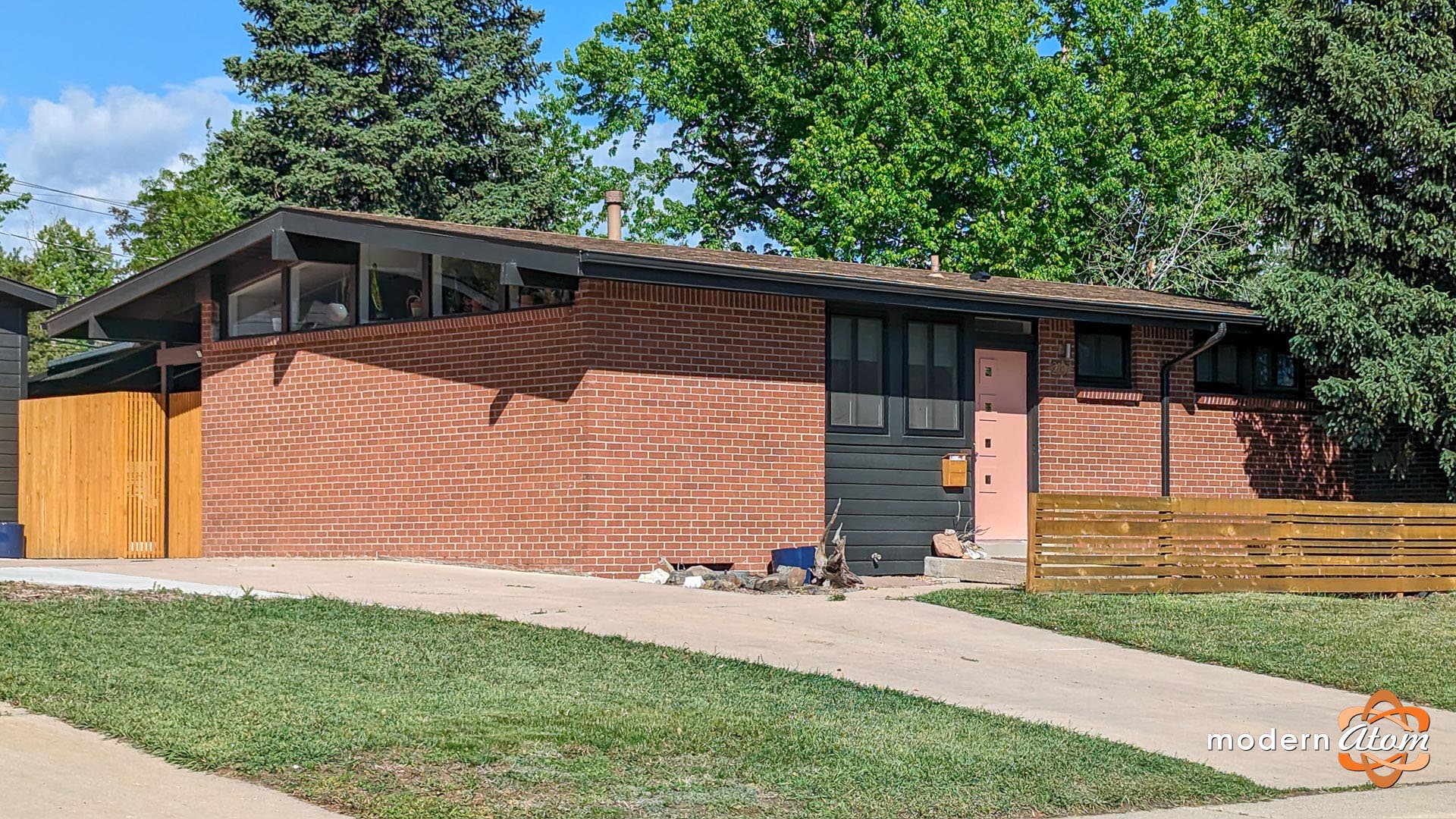
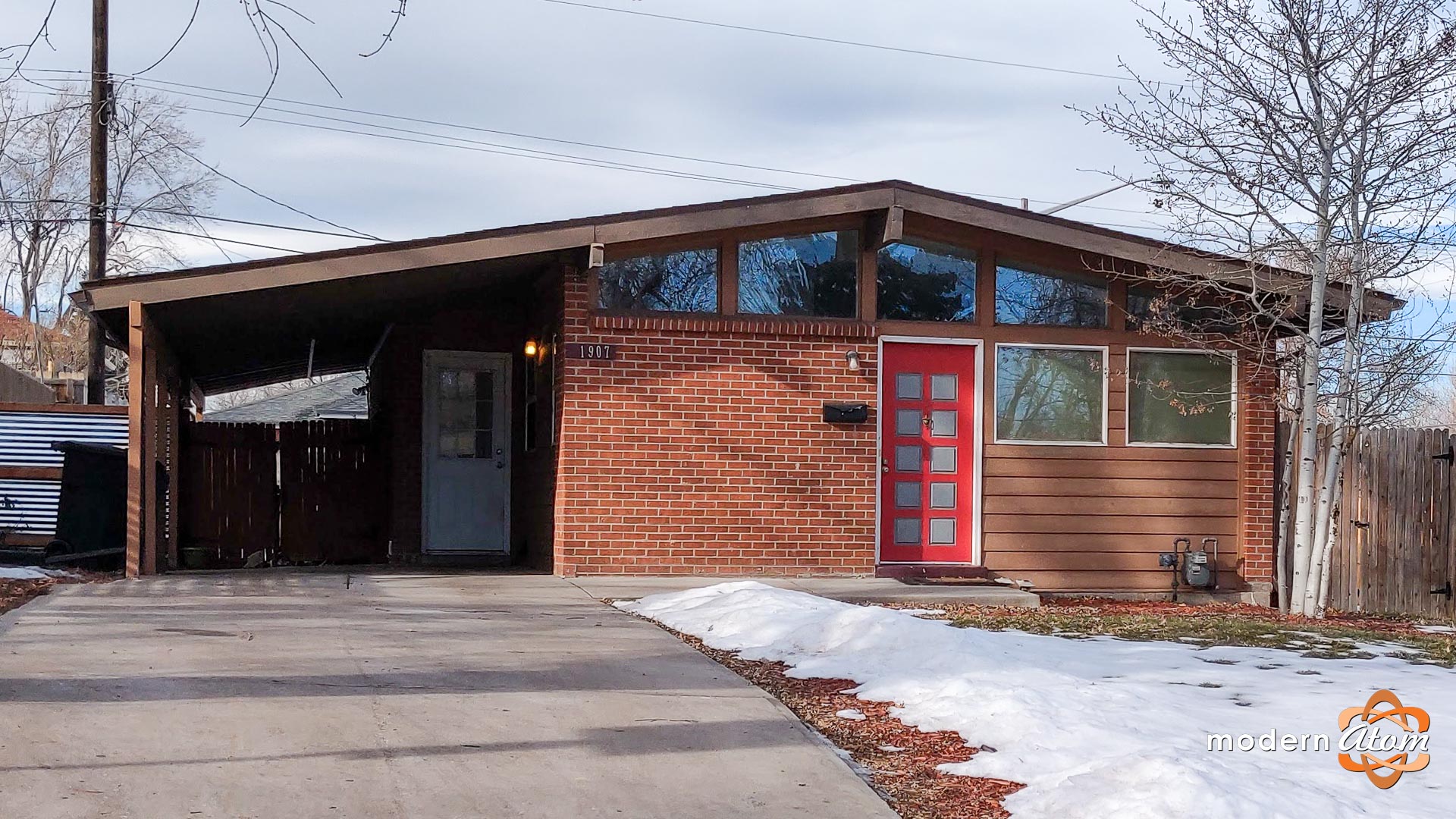
The 2-bedroom model could be arranged in multiple ways in relation to the street, each with different rooflines and carport options. While most examples have a clerestory window under the gable facing the street with no front windows to maximize privacy, with a protected entrance deep inside the carport - there were other options - including a front door under the gable that faced the street, and a version where the broad side of the home faced the street with a front door - using what would have typically been a side door to the backyard as the main entrance. One kit of parts . . . many options.
The 3-Bedroom Model
The 3-bedroom plan received national recognition for its planning around a central multi-purpose room that took the place of a bedroom hallway (but ultimately also stole space that could have been used for the kitchen). While the choice was lauded at the time, homeowners ultimately found this space awkward, and it never really worked as well as envisioned - especially in context of a tiny kitchen.
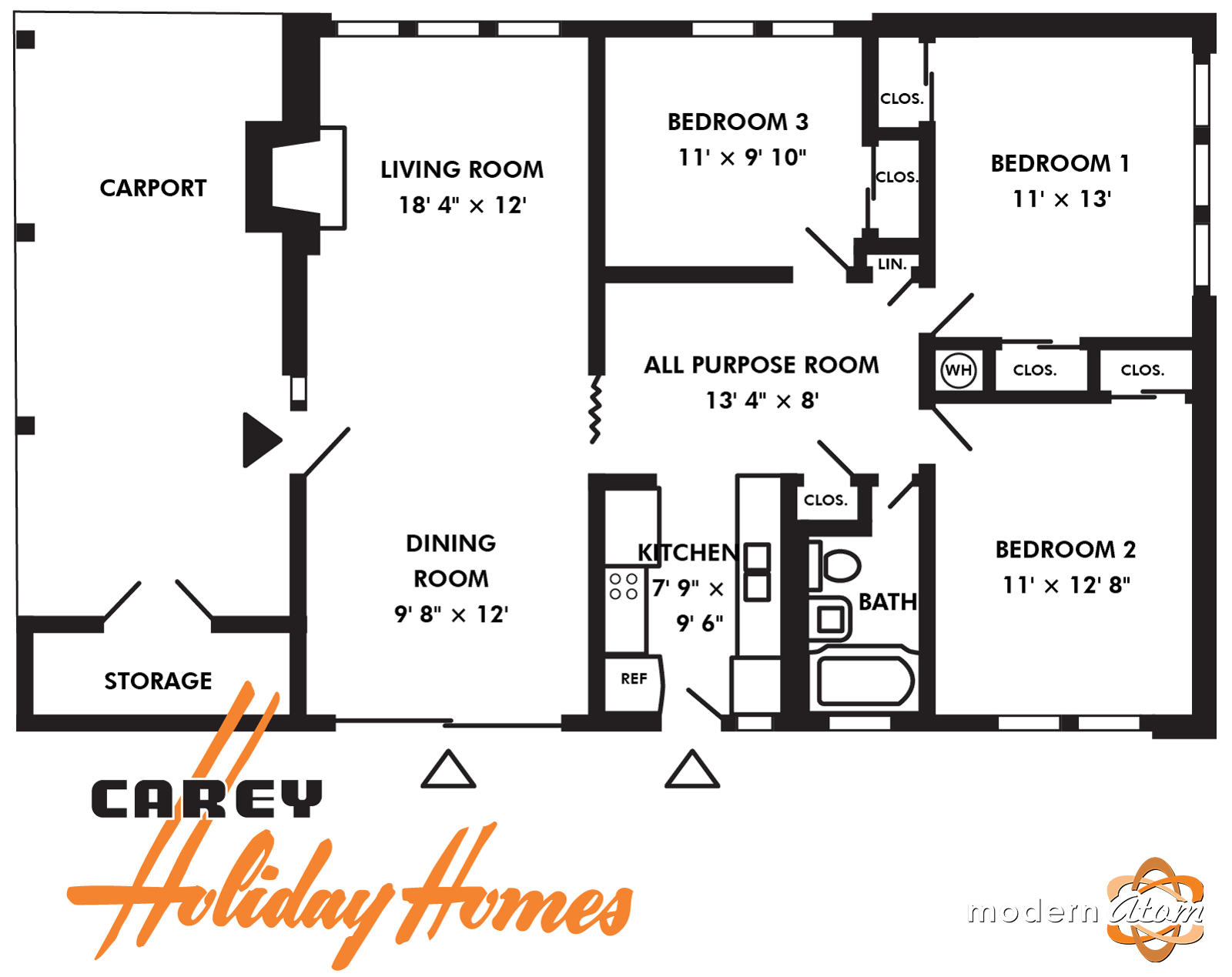
Basements were an option in the 3-bedroom floor plan, in which case, a basement stair would be added to the left side of Bedroom 3 in this plan - this made an already small room even smaller. This plan shows how the all-purpose room was sold as an informal space that could be closed off from the living and dining room using a folding wall - though I have never seen a folding wall installed in recent years. Notice how there is an 8' sliding glass door (BIG even by today’s standards), and another door to the back from the kitchen - this was a home planned for indoor-outdoor living!
Like the two bedroom models, there was a variety of ways that the home could interface with the street, with options including the narrow end of the home facing the street, the broad side of the home facing the street, and another version with the broad side facing the street with a large gable roof that had no clerestory windows or vaulted ceilings inside! Fireplaces were an option in the 3-bedroom models, however, if you had the version with the clerestory windows, and firplace would block one of your clerestory windows. The version of the home with the broad side facing the street that also had clerestory windows/vaulted ceilings also included an attached carport that was kept flat so as not to interfere with the clerestory windows - but this created an unusual, if sloppy design detail where the carport met the house. If would be interesting to know if Polivnick was involved in this decision, or if was an aftertought by Carey. There are quite a few homes that have this detail.
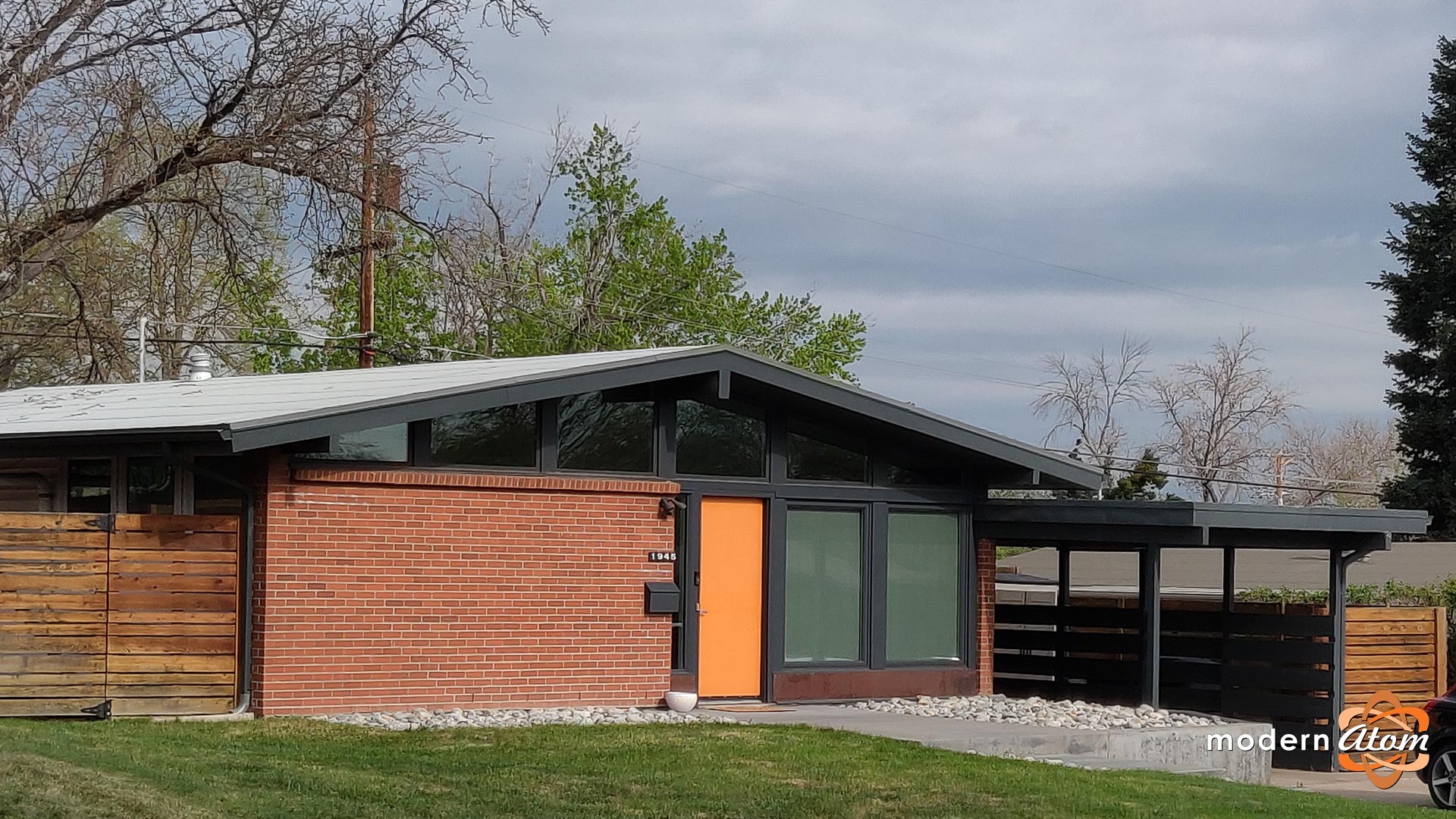
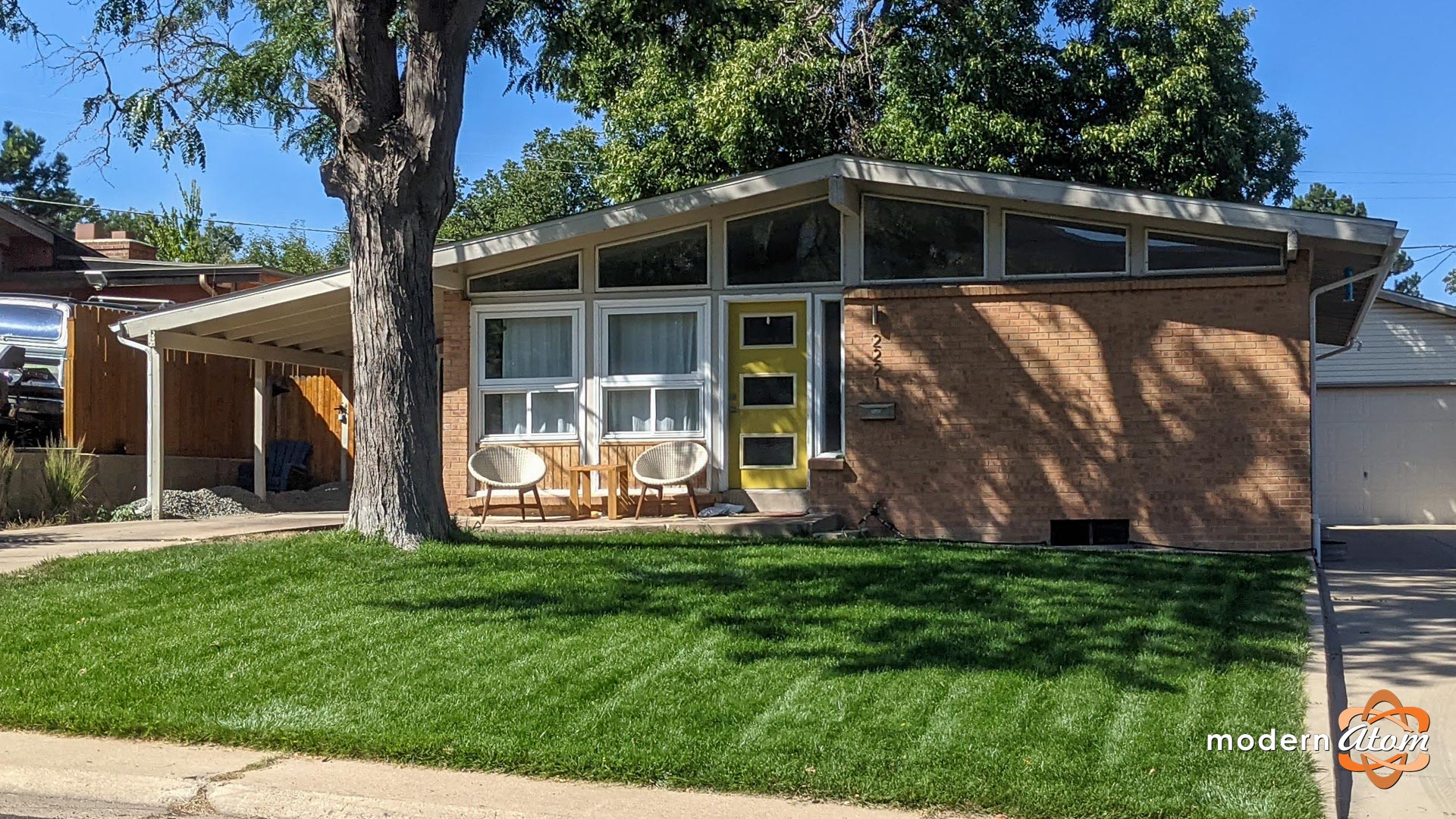
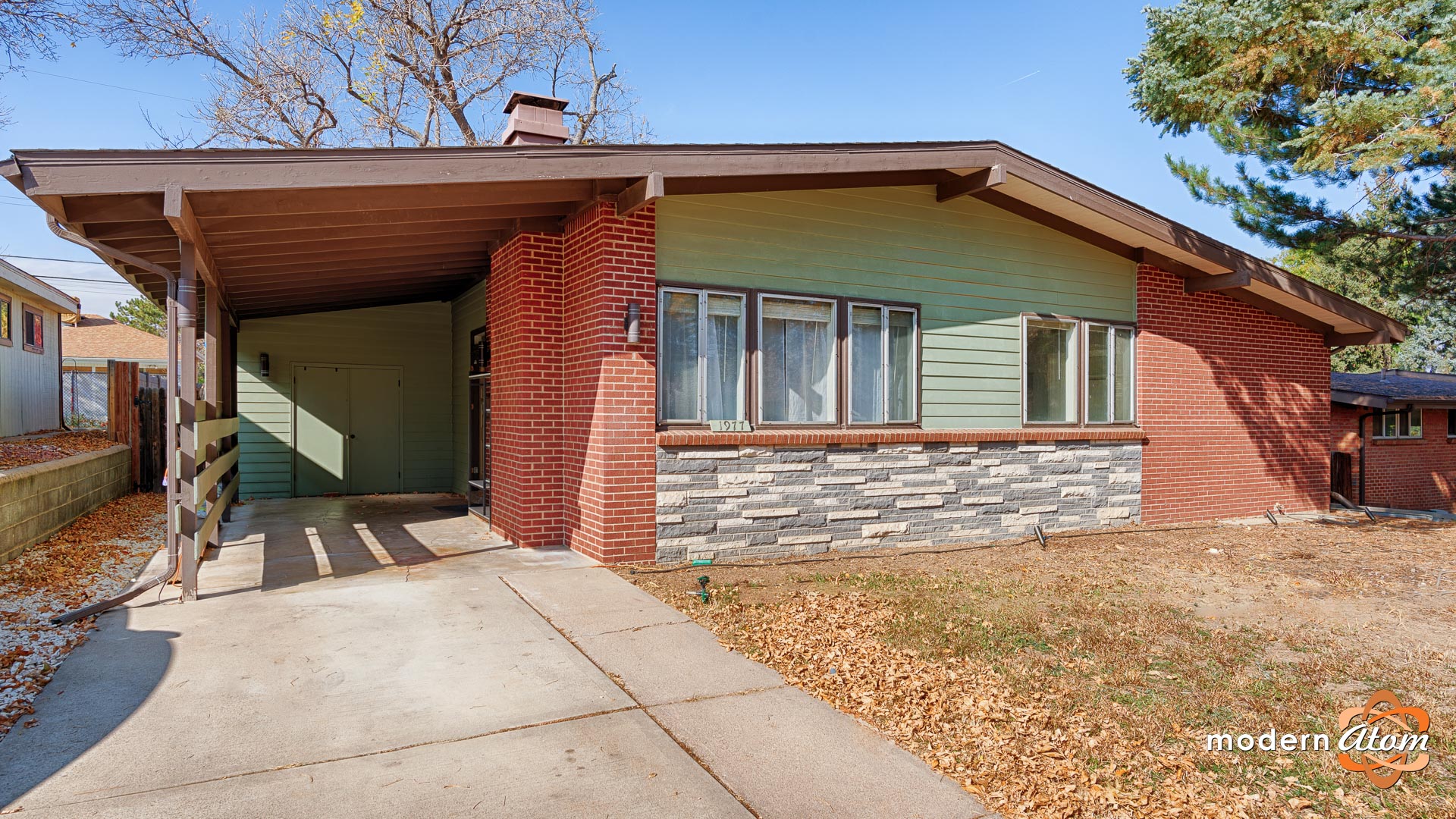
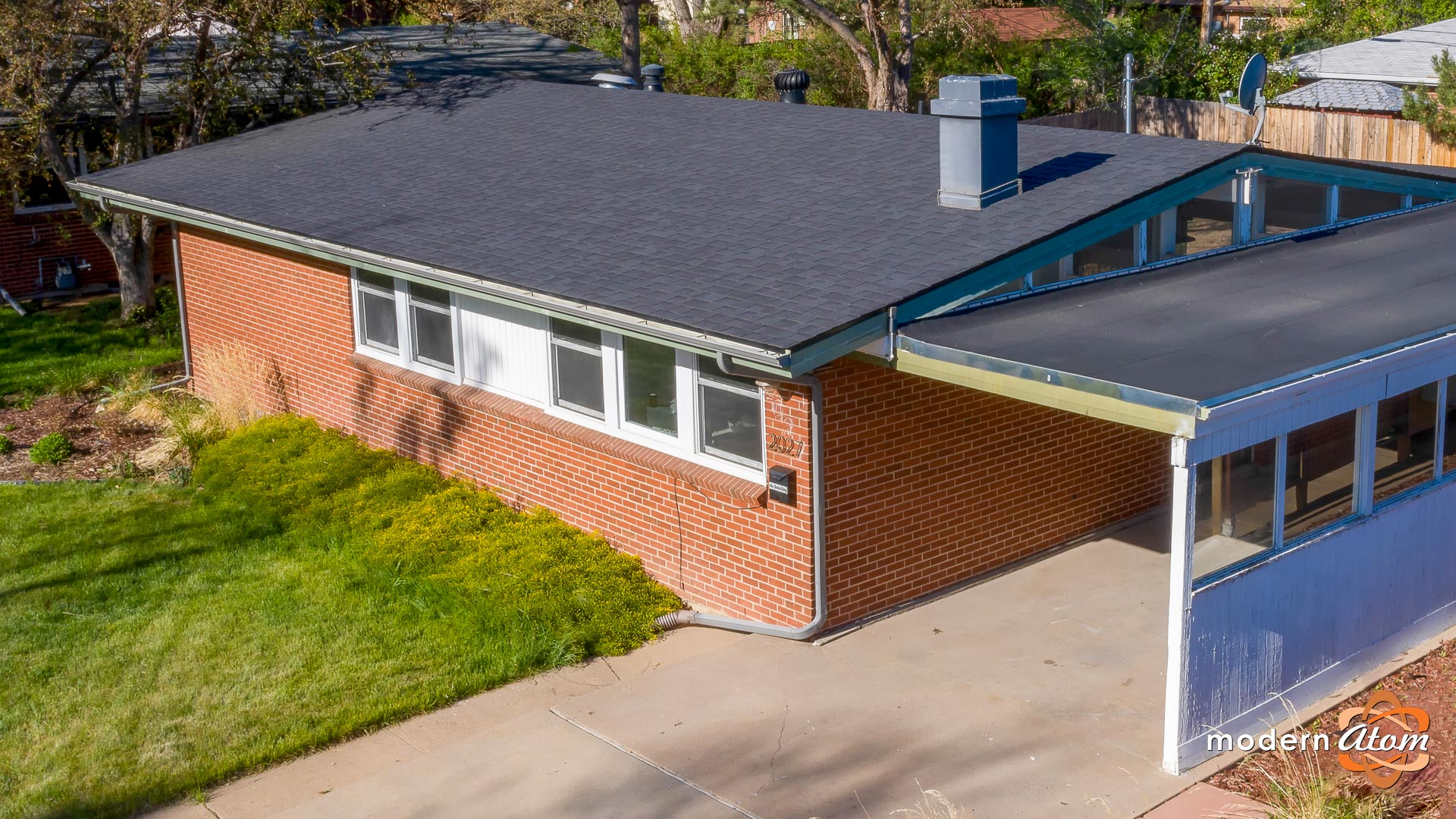
The 3-bedroom model received national recognition in 1955 by Parents’ Magazine. Upon awarding the 3-bedroom plan their Regional Merit Award, said the February 1955 issue of the magazine:
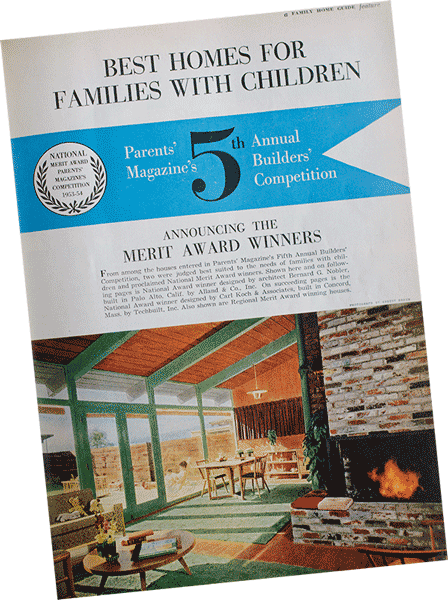
“A SIMPLE plan,” the judges remarked, “but one that points to the possibility of greater use of the home by each member of the family.” Planned with easy-to-care-for materials that require minimum of upkeep and care, both the indoor and outdoor living areas of this house have been developed to meet the family’s needs, to make entertaining friends easy, to provide a relaxed atmosphere. By making the area between the kitchen and sleeping areas into a playroom, which can be closed off from the living-dining room by means of a sliding accordion-type door, the family has living areas which have greater flexibility. The carport provides not only necessary additional storage for garden equipment, toys, but it shelters callers at the main entrance in bad weather and gives the children a protected place to play outdoors on rainy days.”
The Bigger, Better Holiday Executive in 1955, inspired by people who are going places . . . doing things . . .
In 1955, Carey Construction Co. introduced a follow-up pair of models to the original Holiday Homes product line (they did continue to build the original Holiday Homes at the same time). The “Executive” models were said to be targeted toward the young executive – the homebuyer who wanted more space and amenities than the original Carey Holiday Homes offered – dramatic vaulted ceilings with window walls and fantastic clerestory windows, and a generous eat-in kitchen to replace the too-small kitchen of the original Holiday homes – plus a 2-car carport in one of the models, all set in a location of Harvey Park with views of Riviera Circle Lake, which Carey was developing at the same time as a private lakefront custom home community—the model home for the Carey Holiday Homes Executive Models doubled as the sales office for the Riviera Circle Lake community (which is also where the Carey family made their home in Harvey park for over a decade).
The Executive models came in two different offerings - a 3 bedroom and a 4 bedroom option (both with 2 bathrooms, standard). While the designs are architecturally similar to the original holiday homes, these are all-new plans with dramatically different features. Many of the design features were meant to take what is still a relatively modest size home, and give it features more similar to what an expensive custom rambling ranch would have had at the time - an ensuite bath in the primary bedroom, and actual foyer for receiving guests, a separate service entrance for deliveries and informal visitors, a spacious eat-in kitchen, and the Executive 4 even has a mud room - something that would not come into vogue until decades later.
Here is a list of features that were advertised in the Holiday Executive brochure:
- Two full CERAMIC TILE BATHS with built-in vanity
- Sliding, aluminum framed WINDOW WALLS
- INLAID ARMSTRONG LINOLEUM on kitchen and bathroom floors
- Famous Lennox forced air PERIMETER HEAT
- GE ‘Color’ KITCHENS with family eating area
- Alwintite, life-long ALUMINUM WINDOW SASH
- Beautiful HARDWOOD TRIM throughout interior
- Heat and stain resistant TEXTOLITE KITCHEN AND VANITY COUNTER TOPS
- Spacious, Colorado-keyed PATIOS for outdoor living
- Handsome BRICK VENEER CONSTRUCTION
- Desert, natural-colored LIFETIME ROOFS
- Your choice of 1,322 KOMAC COLORIZER INTERIOR PAINTS
- VENT HOOD over kitchen range
- CRANE COLORED or WHITE BATHROOM FIXTURES, your choice
- BEAUTIFUL LAKE-VIEW SITES
- Convenient GE DISPOSAL
- GE AUTOMATIC DISHWASHER (in HOLIDAY EXECUTIVE 4 model)
AND, every HOLIDAY HOME EXECUTIVE MODEL HOME is CAREY Custom-quality constructed for a lifetime of living satisfaction.
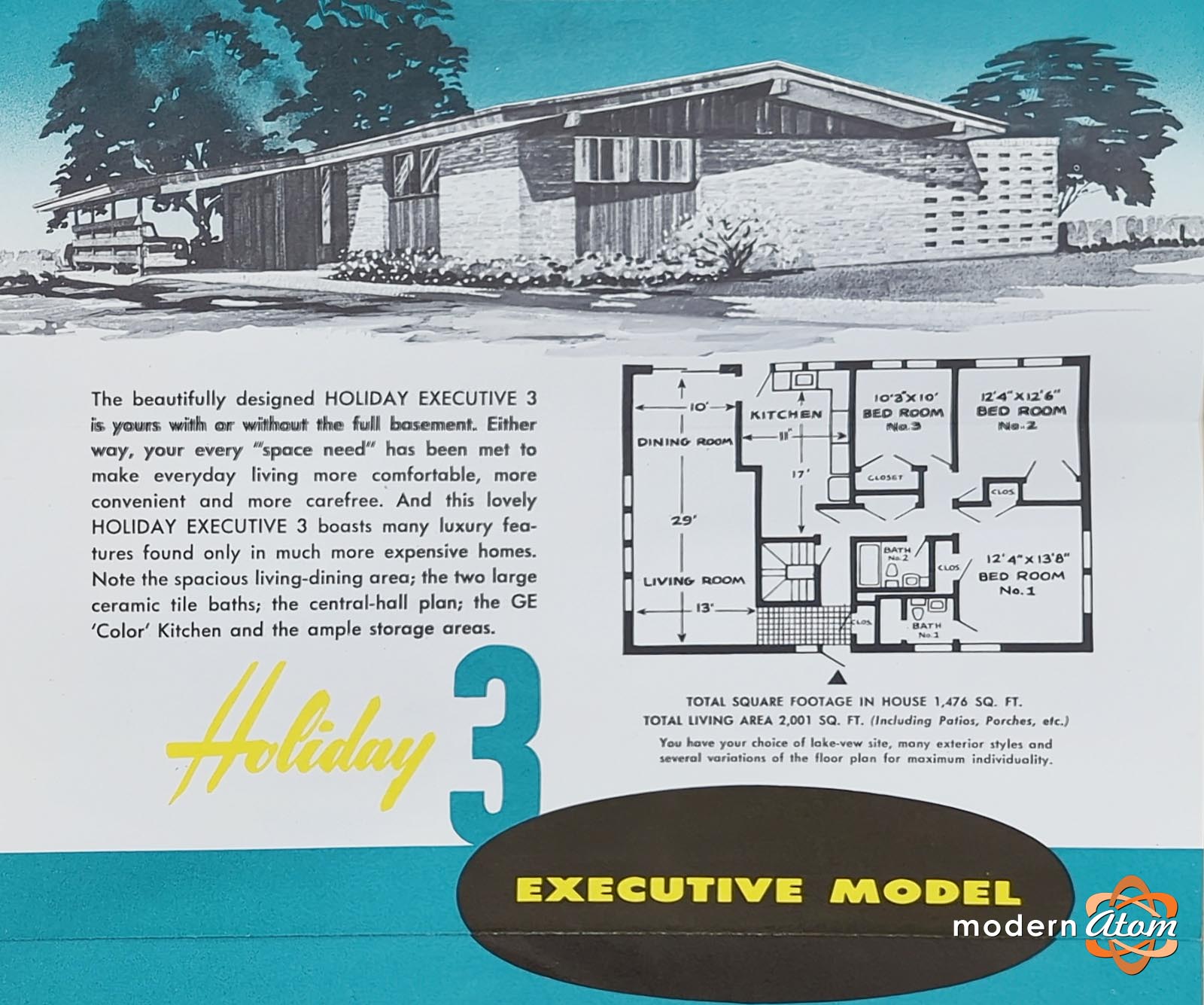
The Holiday Executive 3
The Holiday Executive 3 is a super-sized version of the original Carey Holiday Homes 3-bedroom plan. It does away with the multi-purpose room idea, and instead puts that space into a huge eat-in kitchen. and space for a basement stair that doesn’t rob space from the smallest bedroom. All of the bedrooms are well-sized, and the primary bedroom gets its own bathroom. These homes generally feature an attached one-car carport.
The Holiday Executive 4
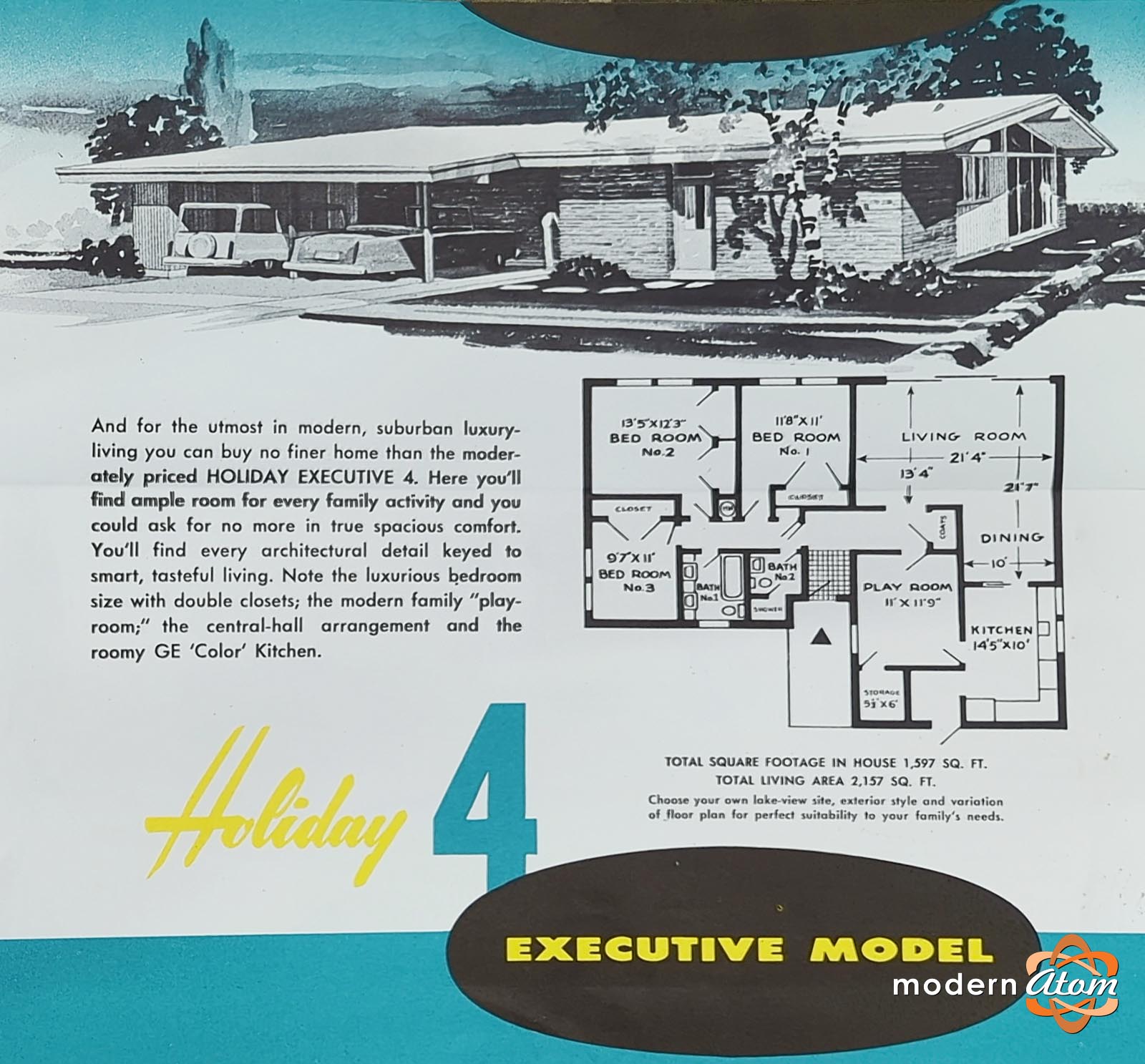
The Holiday Executive 4 offers an L-shape floor plan with a 4th bedroom that is designed to be used as an optional home office, play room, etc. The location of this room makes it so that someone working from home could receive business clients without disturbing the sleeping area of the home, and its central location is good for other uses too. This home features a large eat-in kitchen with vaulted ceilings and huge windows that go all the way up to the ceiling. It is seprated from the dining room with a pony wall so that it is not completely closed off from the house, and a pocket door provides an option to close it off visually.
Instead of an ensuite bath on the primary bedroom, this home offers two bathrooms side-by-side in the sleeping hall that are accessible to everyone in the home - one with a bathtub and double vanity (another feature ahead of its time), and the other with a shower.
The formal entrance of this home is deep inside the carport, similar to the original Carey Holiday Home 2-bedroom models - however, this home also offers an informal entrance off the kitchen that opens into a mud room.
The Carey Holiday Homes Story Continues . . .
In all, 133 Carey Holiday Homes were built in Harvey Park, 29 of which are the Holiday Executive models. They are not all built together – rather there are 4 little pockets surrounding Riviera Circle Lake where you can find them. There are not any other neighborhoods that Carey is known to have built this unique line of homes. Baume and Polivnick, the architects behind the line of homes did file a copyright on their design for the first phase of the Holiday Homes, which is on file at the U.S. Copyright office. There is a small group of homes in nearby Athmar Park that were built a couple of years prior to the Carey Holiday Homes that look strikingly similar in design. I am conducting some research to see if there is any connection.
Overall, longtime residents of the Carey Holiday Homes have commented that these homes “live very well,” which is a testament to the quality of design and craftsmanship that went into their design. Do you have stories to tell from owning or growing up in a Carey Holiday Home? I would love to hear your story and share it here on my website and elsewhere! I am also still on the hunt for an original Holiday Homes brochure . . .
Where to Find the Carey Holiday Homes
Parade of Homes
The Carey Holiday Homes were featured in both the 1954 and 1955 Parades.
1905 S Utica Street was featured in 1954
2203 S Raleigh Street was featured in 1955
The Carey Holiday Homes In the Media
- “200 Contemporary Homes in New Project.” The Denver Post, June 16, 1954, 45.
- “47,000 Homes to Be Built in Colorado in Next 3 Years.” The Rocky Mountain News, June 20, 1954, 29.
- “Don’t Miss Denver’s Big ‘Parade of Homes.’” The Rocky Mountain News, September 25, 1954, 11.
- “Best Homes for Families with Children.” Parents’ Magazine, Volume 30, no. 2 (February 1955): 49
- “‘Young Executives’ Homes Opened,” The Denver Post, May 5, 1955, 62.
- “Modernism Gives a Fully Functional Effect” The Denver Post, September 9, 1955, 44.
- Gringeri-Brown, Michelle. Atomic Ranch: Design Ideas for Stylish Ranch Homes. Layton, Utah: Gibbs Smith, 2006, 154-159.
- Davenport, Bromley. “Joe Average Gets Modern: Denver’s Midcentury American Dream.” Atomic Ranch Magazine, no. 15 (Fall 2007): 22-32
Contact me with your questions and to schedule a private tour of the homes above or any other homes for sale in the Denver metro area. 303-900-8220 / Atom@ModernAtom.homes
Images and words on this page, except for real estate listing information from the MLS (see copyright information on each listing page), and select historic artifacts, are copyright ©2025 Atom Stevens, and may not be reproduced without written permission from the author. All rights reserved.
